
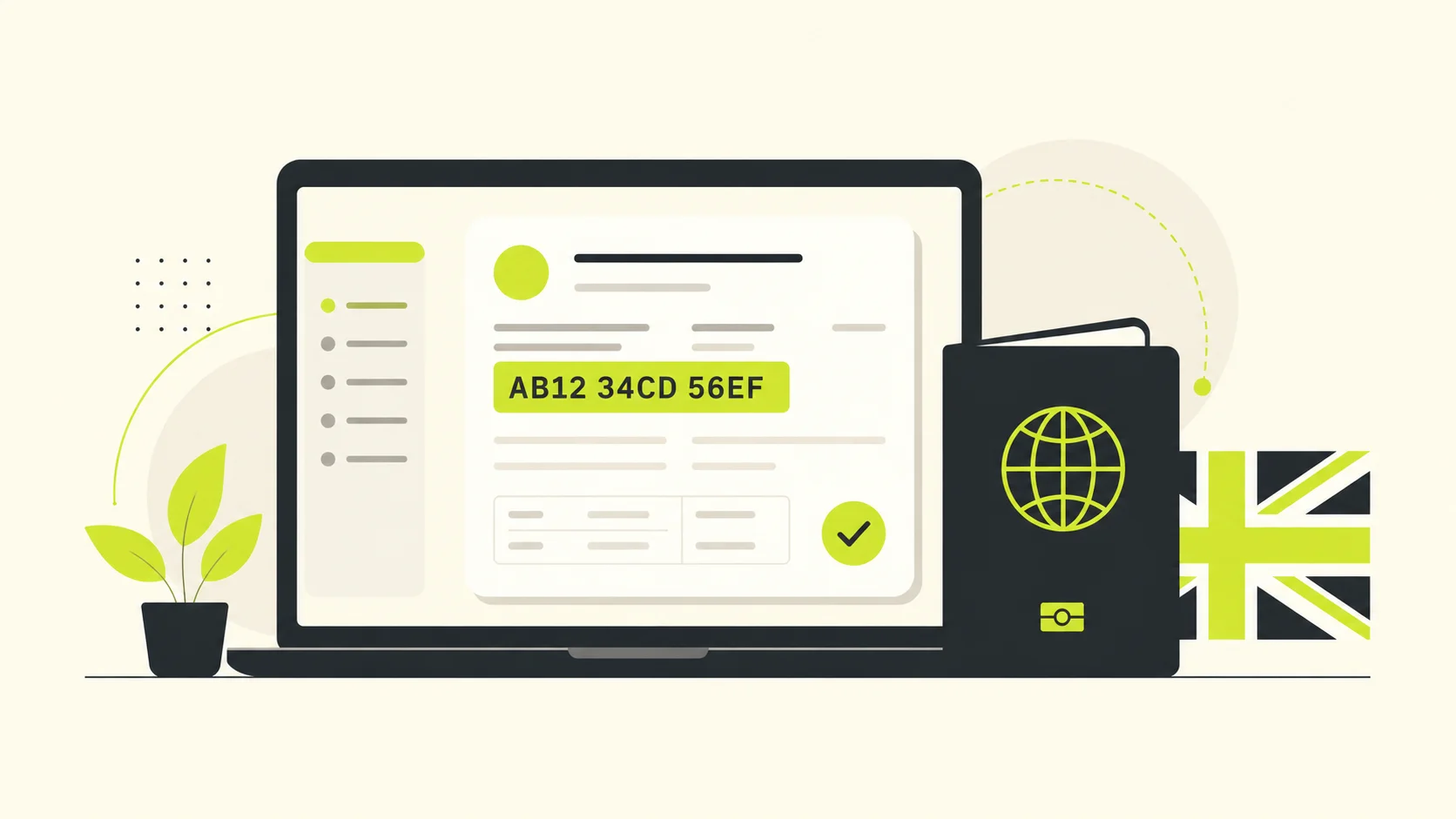
If you are an international student or graduate job-hunting in the UK, you have almost certainly seen the phrase in a job advert or a rejection email. A Certificate of Sponsorship is the single document that stands between a job offer and a legal right to work here on a sponsored visa – and it is one of the most misunderstood parts of the whole system. This guide explains what a Certificate of Sponsorship actually is, who issues it, what it costs, how long it lasts, and what you can realistically do to put yourself in front of employers who can issue one.
What Is a Certificate of Sponsorship (CoS)?
A Certificate of Sponsorship is an electronic record created by a UK employer that holds a valid sponsor licence. Despite the name, it is not a paper certificate, a letter, or anything you can print and frame. It is a digital entry generated through the Home Office’s Sponsor Management System (SMS), and it produces a unique reference number.
That reference number is what matters. You enter it into your visa application, and the Home Office uses the record behind it to check that the job you have been offered is genuine, that it sits at the right skill level, and that the salary meets the rules.
What a Certificate of Sponsorship is not
Three quick corrections, because these misunderstandings cost people time:
- It is not a visa. Holding a CoS reference number does not give you permission to work. You still have to apply, pay the fees, and be assessed on your own merits, including identity, finances and English language.
- It is not a guarantee. The Home Office can still refuse the visa even with a valid certificate assigned.
- It is not something you can buy. Any individual or “agent” offering to sell you a Certificate of Sponsorship is operating outside the rules. Only a licensed employer can assign one, and only for a genuine vacancy they intend to fill.
Which Visas Need a Certificate of Sponsorship?
Most employer-sponsored UK work routes require one. The main ones relevant to international graduates are:
- Skilled Worker visa – the primary long-term route, and the one most graduates aim for
- Health and Care Worker visa – a sub-route of Skilled Worker for eligible clinical roles
- Global Business Mobility routes – for intra-company transfers and overseas businesses expanding into the UK
- Temporary Worker routes – including Charity Worker, Creative Worker, Government Authorised Exchange and Seasonal Worker
- Scale-up and Minister of Religion / International Sportsperson routes
The Graduate visa does not require sponsorship, which is exactly why it is so useful – more on that below.
Defined vs Undefined Certificate of Sponsorship

This is the distinction that trips people up most often, and getting it wrong can sink an application. There are two types, and which one you need depends entirely on where you are when you apply.
Defined Certificate of Sponsorship
A defined CoS is used when a Skilled Worker applicant is applying from outside the UK. The employer has to request each one individually from the Home Office through the Sponsor Management System, giving details of the role and why it is needed. The Home Office reviews the request before the employer can assign it.
In practice, defined requests are usually approved quickly – often within about one working day, though they can take longer if the request is referred for further checks.
Undefined Certificate of Sponsorship
An undefined CoS is used when the applicant is already in the UK – for example, someone switching from a Graduate visa or a Student visa into the Skilled Worker route, or extending an existing sponsored visa. It is also used for most non-Skilled-Worker sponsored routes.
Employers hold an annual allocation of undefined certificates, granted when their licence is approved. They can assign one immediately from that allocation with no individual pre-approval. If they run out, they can request more – but allocation increase requests can take a number of weeks to process, which is why timing conversations early with an employer matters.
Why this matters to you
If you are in the UK on a Graduate or Student visa, you need your employer to assign an undefined certificate. If an employer tells you they are “waiting for Home Office approval on your CoS” while you are sitting in the UK, that is worth a polite clarifying question – they may be preparing the wrong type, or they may have exhausted their allocation and be waiting on an increase.
What Information Goes on a Certificate of Sponsorship?
The record is detailed, and every field is checked against your visa application. It typically includes:
- Your personal details – full name, date of birth, nationality, passport number
- The job title and the SOC 2020 occupation code the employer has assigned to the role
- A summary of the main duties
- Gross annual salary and hours per week
- Start date and end date of the sponsored employment
- The employer’s sponsor licence number and details
- The work address
The SOC code is the field to pay closest attention to. It determines the “going rate” your salary must meet, and it is the field most likely to cause a refusal if it does not honestly match the work you will actually be doing. If your employer has coded a data analyst role as something adjacent because the going rate is lower, that is a problem for both of you.
How Much Does a Certificate of Sponsorship Cost – and Who Pays?
This is where a lot of anxiety comes from, so let’s be precise about who carries which cost.
What the employer pays
- The CoS assignment fee. As of 2026 this sits at roughly £525 per certificate on the main Worker routes, with a much lower rate (around £55) for Temporary Worker routes. Figures are reviewed periodically – check the current fee on GOV.UK before quoting it to anyone.
- The Immigration Skills Charge. Paid per sponsored worker per year of sponsorship. Following an increase in December 2025, it sits in the region of £1,320 per year for medium and large sponsors and around £480 per year for small or charitable sponsors.
- The sponsor licence fee itself, plus the internal HR and legal time to stay compliant.
Critically: the employer is not permitted to recover the CoS fee, the sponsor licence fee or the Immigration Skills Charge from you. If a prospective employer asks you to pay these back, or to “contribute” to them, that is a compliance breach on their side. Walk away and consider reporting it.
What you pay
You are responsible for your own visa application fee and the Immigration Health Surcharge, which is charged per year of the visa granted. These are genuinely yours to budget for, and they are substantial – plan for them early rather than in the final fortnight.
Always verify current figures on GOV.UK before making financial decisions. Home Office fees, salary thresholds and the Immigration Skills Charge have all changed more than once in recent years, and the direction of travel has been upward.
How Long Is a Certificate of Sponsorship Valid?
A Certificate of Sponsorship is valid for three months from the date it is assigned, and it can only be used once.
You must submit your visa application within that window. If the three months lapse, the certificate expires, cannot be revived or extended, and your employer has to request and pay for a new one. Nobody enjoys that conversation, so once a CoS is assigned, treat your application as the immediate priority.
You can generally apply up to three months before the start date shown on the certificate.
How to Get a Certificate of Sponsorship: The Realistic Steps
You cannot apply for one. Only an employer can assign one to you. So the practical sequence looks like this:
You apply for the visa within three months, quoting the reference number.
Target employers who actually hold a sponsor licence. The Home Office publishes a register of licensed sponsors on GOV.UK. Download it, filter by your city and sector, and build your application list from it rather than applying blind.
Check the role clears the current bar. Since 22 July 2025, Skilled Worker roles generally need to sit at RQF Level 6 – degree level – and meet a general salary threshold of £41,700 per year or the occupation’s going rate, whichever is higher. Reduced thresholds exist for new entrants (around £33,400 or a proportion of the going rate), which many recent graduates qualify for.
Meet the English language requirement. For applications made on or after 8 January 2026, first-time Skilled Worker applicants need to demonstrate English at CEFR B2 level, up from the previous B1 standard.
Secure the offer, then confirm sponsorship in writing. “We’re happy to look into sponsorship” is not the same as “we will assign you a Certificate of Sponsorship”. Ask directly whether they hold a current licence, whether they have allocation available, and what their internal approval process is.
Employer assigns the CoS through the SMS. Defined if you’re overseas, undefined if you’re in the UK.
The Graduate Visa Route and Your Certificate of Sponsorship Timeline
For most international students in the UK, the Graduate visa is the bridge. It requires no sponsorship, no job offer and no minimum salary – you can work in almost any role while you build experience and find an employer willing to sponsor you.
The timing has changed, and it matters. Graduate visa applications submitted on or before 31 December 2026 still receive the full two years for bachelor’s and master’s graduates. Applications made from 1 January 2027 onwards receive 18 months. PhD and doctoral graduates continue to receive three years.
Six months sounds minor. In practice it is often the difference between reaching a sponsorship-viable salary and falling short of it, because most graduate salary progression happens at the twelve-to-eighteen-month review point. If you are eligible now, applying before the end of 2026 is worth serious consideration.

Whichever duration you get, work backwards from the expiry date. Sponsorship conversations should start no later than the halfway point of your Graduate visa, because if your employer does not yet hold a licence, an application takes weeks to process – and an allocation increase can take longer still.
Why Certificates of Sponsorship Cause Visa Problems
Refusals rarely come from anything dramatic. The recurring causes are:
- Passport or personal detail mismatches between the certificate and the application
- Wrong CoS type – a defined certificate used for an in-country switch, or vice versa
- SOC code that doesn’t match the actual duties, which undermines the genuineness of the role
- Salary below the applicable threshold or going rate. Since 8 April 2026, the Home Office has assessed salary compliance at pay-period level rather than only against the annual figure, so irregular or fluctuating pay is now a real risk
- The three-month window lapsing before the application is submitted
Check every field on the certificate the moment it’s assigned. Amendments are possible in some circumstances, but they are far easier before an application than after a refusal.
How to Get in Front of Sponsoring Employers
The honest position: fewer UK employers sponsor now than three years ago, and the ones that do are more selective. That makes strategy more important than volume.
- Filter by the sponsor register first. Applying to non-licensed employers is time you will not get back.
- Target sectors with structural sponsorship habits – technology, engineering, finance, professional services, healthcare, and larger graduate schemes that already run sponsorship processes.
- Lead with the Graduate visa in your applications. You are not asking for immediate sponsorship. You are asking to be hired now at no immigration cost, with a sponsorship conversation later. That reframing removes the objection most employers raise first.
- Make the salary case early. If the threshold is the obstacle, know your going rate and your new entrant eligibility before you negotiate.
- Get your CV and LinkedIn working for the UK market. Read our guide to common CV mistakes international students make and our LinkedIn tips for international students job-hunting in the UK.
For the wider picture on which employers hold licences and how to approach them, see our guide to UK work visa sponsorship and companies hiring international talent, and for post-study timing, our Graduate visa route explained.
Frequently Asked Questions
Can I apply for a Certificate of Sponsorship myself? No. Only a UK employer holding a valid sponsor licence can request and assign one. You cannot apply for one independently, and nobody can legitimately sell you one.
How long does it take to get a Certificate of Sponsorship? An undefined CoS can be assigned immediately if the employer has allocation available. A defined CoS for an overseas applicant usually takes around one working day for Home Office approval, though it can take longer if referred for checks. Delays are more often internal to the employer than at the Home Office.
Does a Certificate of Sponsorship guarantee my visa? No. It is a prerequisite, not an approval. The Home Office still assesses your application independently, including identity, finances, English language and the genuineness of the role.
Can my employer ask me to pay for the Certificate of Sponsorship? No. The CoS fee, the sponsor licence fee and the Immigration Skills Charge must all be paid by the employer and cannot be recouped from you. You are responsible only for your own visa fee and Immigration Health Surcharge.
What happens if my Certificate of Sponsorship expires? It cannot be extended or reinstated. Your employer must request and pay for a new one before you can apply. Submit your application well inside the three-month window.
Can I change jobs on a Skilled Worker visa? Not freely. A new employer must assign you a new Certificate of Sponsorship and you must apply to update your visa before starting. Changing employer without that is a breach of your conditions.
Do I need a Certificate of Sponsorship on a Graduate visa? No. The Graduate route is unsponsored. You need one only when you switch into a sponsored route such as Skilled Worker.
Immigration rules change frequently. Salary thresholds, Home Office fees and route durations quoted here reflect the position at the time of writing and should be verified against GOV.UK and UKCISA before you make any decision. This article is general information, not immigration advice.
Ready to build a UK job search that actually leads to sponsorship?
Job Bridge Recruitment works with international students and graduates across the UK to target the right employers, position applications properly, and time the sponsorship conversation so it lands. Book a free consultation.
